

Signs of Hypothermia in Newborn Puppies
Table of Contents
- What Is Neonatal Hypothermia in Puppies
- Physical Signs and Symptoms of Hypothermia
- Causes of Low Body Temperature in Puppies
- How to Warm a Cold Puppy: Step-by-Step Re-warming Protocol
- Puppy Incubator Temperature Settings and Monitoring
- Newborn Puppy Temperature Chart and Vital Signs
- Risks, Complications, and Post-Hypothermia Recovery
- When to Seek Emergency Veterinary Care
- Frequently Asked Questions
Last Updated: August 25, 2026
What Is Neonatal Hypothermia in Puppies
Neonatal hypothermia in newborn puppies is a dangerous drop in core body temperature below the normal range of 95°F to 99°F, occurring during the critical first weeks of life (avma.org). Puppies cannot regulate their own body temperature effectively until around 3-4 weeks of age and depend entirely on environmental warmth and their mother's body heat for thermal stability (vet.cornell.edu).
Even a slight temperature drop triggers metabolic failure: the puppy's heart rate slows, oxygen consumption drops, and the puppy becomes lethargic and unable to nurse. Within hours, an untreated hypothermic puppy can slip into organ failure. According to veterinary research on neonatal canine mortality, environmental temperature management is the single most critical factor in newborn puppy survival. At Puppywarmer, we provide specialized incubators and oxygen concentrators designed to give at-risk, newborn puppies the best start, the difference between survival and loss often comes down to how quickly a caregiver recognizes the warning signs and begins proper re-warming.

Physical Signs and Symptoms of Hypothermia
Early Warning Signs
The first signs of hypothermia appear subtly. A cold puppy will seem unusually quiet and may not nurse as vigorously as littermates. The puppy's skin will feel cool to the touch, particularly on the ears, nose, and paws. You might notice reduced responsiveness and the puppy spending more time alone rather than huddled with the dam and littermates.
Early warning signs include:
- Lethargy and reduced activity
- Weak or absent sucking reflex
- Cool skin temperature, especially extremities
- Weaker whimpering than littermates
- Reluctance to move or position itself near the dam
- Dilated, glassy pupils
One critical signal is when a puppy stops seeking the dam's warmth. Healthy puppies instinctively crawl toward the mother and littermates. A cold puppy may lie passively without attempting to nurse or burrow into the nesting box.
Critical Symptoms Requiring Immediate Action
When hypothermia progresses, signs become unmistakable and demand emergency intervention. A severely hypothermic puppy will be nearly unresponsive, with a barely perceptible heartbeat and shallow breathing. Mucous membranes (gums and tongue) may appear pale or bluish, indicating poor oxygen circulation.
Critical symptoms requiring immediate re-warming include:
- Severe lethargy or unresponsiveness
- Gasping or very shallow, slow breathing
- Inability to stand or lift the head
- Cyanosis (bluish tint to gums, tongue, or skin)
- Rigid or stiff limbs
- No sucking reflex whatsoever
- Rectal temperature below 94°F
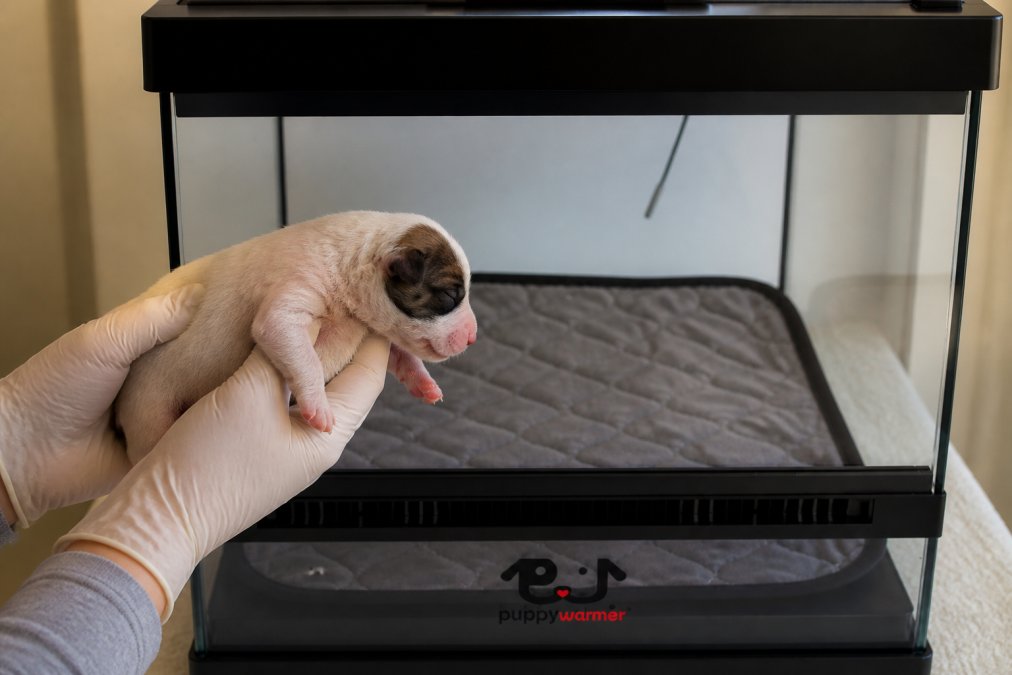
At this stage, every minute matters. The combination of lethargy, respiratory distress, and cyanosis signals that the puppy's metabolic rate has crashed and blood is being shunted away from the skin to preserve core organs. Without immediate re-warming, the puppy will not survive.
Causes of Low Body Temperature in Puppies
Newborn puppies lose body heat far more rapidly than adult dogs because they have minimal fat reserves and cannot generate heat through shivering. Causes fall into two categories: environmental and physiological.
Environmental causes include inadequate nesting box temperature (below 75°F), drafts, wet bedding, and separation from the dam or littermates. Wet puppies lose heat through evaporation at an alarming rate.
Physiological causes include prematurity, low birth weight, and fading puppy syndrome. Premature puppies have underdeveloped thermoregulation systems. Small for Gestational Age (SGA) puppies have fewer metabolic reserves and struggle to generate heat. Puppies with congenital defects, infections, or metabolic disorders may develop hypothermia as a secondary symptom.
Breed-specific factors also play a role. Large-breed puppies like English Bulldogs and French Bulldogs are born with lower metabolic rates and are particularly vulnerable during the first 48 hours. Toy breeds lose heat even more rapidly due to minimal body mass.
How to Warm a Cold Puppy: Step-by-Step Re-warming Protocol
The re-warming process must be deliberate and gradual. Rapid re-warming can cause peripheral vasodilation, which paradoxically drops core temperature further. The goal is to raise core temperature slowly while monitoring vital signs.
Step 1: Assess the Puppy's Condition and Take Rectal Temperature
Use a rectal thermometer to establish the puppy's actual core temperature. Insert the thermometer gently into the rectum about 0.5 inches and hold it for 30-60 seconds. If the temperature is below 94°F, proceed immediately to re-warming.
Step 2: Move the Puppy to a Warm, Quiet Environment
Transfer the puppy to a clean, warm space away from drafts. Remove any wet bedding and replace it with dry, soft material. Avoid sudden loud noises or excessive handling, which can trigger cardiac stress in a hypothermic puppy.
Step 3: Begin Passive External Re-warming
Wrap the puppy gently in warm (not hot) blankets or towels pre-warmed to around 100°F. Place a warm water bottle wrapped in a soft cloth next to the puppy's body. The water bottle should feel warm to the touch but not so hot that you cannot hold it comfortably against your skin for 10 seconds.
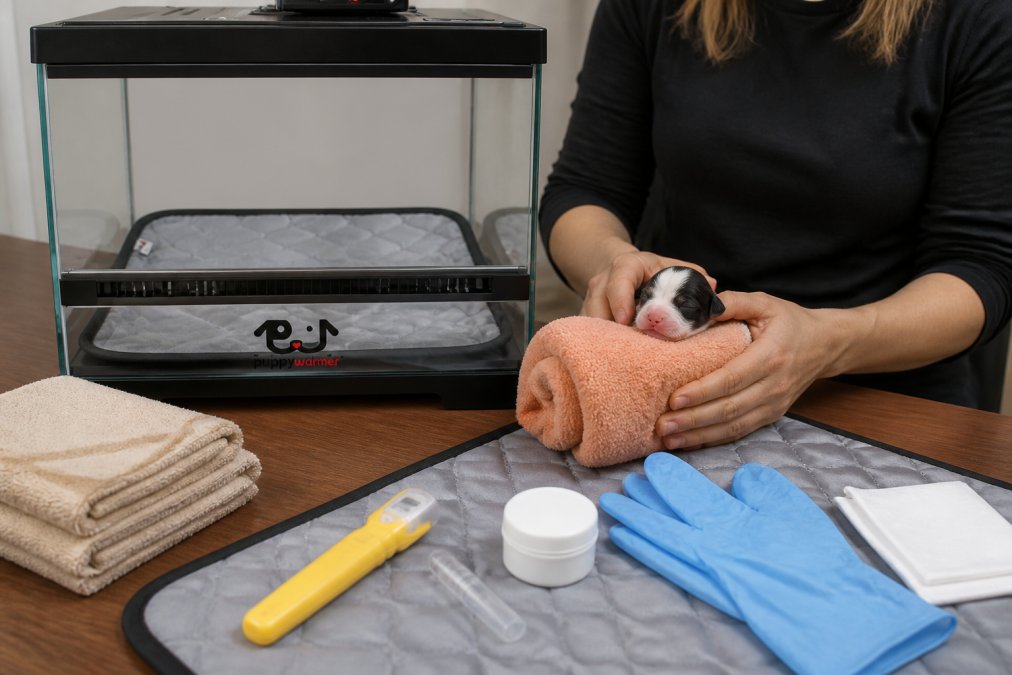
Step 4: Monitor Rectal Temperature Every 15-30 Minutes
Take the puppy's temperature every 15 minutes during the first hour, then every 30 minutes until the temperature reaches 98°F. The goal is to raise temperature at approximately 1°F per hour. If the temperature rises too quickly (more than 2°F per hour), reduce the heat source intensity. keeping puppies warm.
Step 5: Assess the Sucking Reflex
As the puppy's temperature rises above 95°F, the sucking reflex should begin to return. Gently touch the puppy's mouth with a gloved finger or bottle nipple. If the puppy begins to suck, offer warm (not hot) puppy formula or colostrum. Do not force feed; let the puppy nurse at its own pace.
Step 6: Continue Re-warming Until Core Temperature Reaches 98°F
Maintain the warm environment and water bottle contact until the puppy's rectal temperature reaches 98°F. The puppy should be noticeably more responsive, with stronger muscle tone and a more vigorous sucking reflex.
Step 7: Transition to Incubator or Continued Environmental Support
Once the puppy is stable at 98°F or above, place it in a pre-warmed incubator set to 85°F-90°F for the first week of life. If an incubator is not available, maintain the warm nesting box with consistent environmental temperature and ensure the dam is present. Monitor the puppy's temperature every 2-4 hours for the next 24-48 hours.
Puppy Incubator Temperature Settings and Monitoring
A quality incubator provides precise, consistent thermal support that manual methods cannot match. The Puppywarmer incubators feature a PID learning controller that maintains temperature within one degree, eliminating fluctuations that stress a recovering puppy's system.
Temperature settings should follow this progression:
Days 1-7: 85°F-90°F with a thermal gradient (one side warmer, one side slightly cooler). Puppies need the ability to move toward or away from heat as their body signals require.
Days 8-14: 80°F-85°F as the puppy's own thermoregulation begins to develop.
Days 15-21: 75°F-80°F, with continued access to supplemental heat if the puppy seeks it.
Days 21+: Room temperature (70°F-75°F) as long as the puppy can huddle with littermates or the dam.
Monitoring requires a reliable thermometer placed at the level where the puppy rests. Check the temperature at least every 2 hours during the critical first week. The glass enclosure of a Puppywarmer incubator allows visual inspection without opening the unit, which prevents temperature loss. Many breeders add a small water dish to maintain humidity around 50-60%, which helps prevent dehydration and creates a more comfortable microclimate.
Newborn Puppy Temperature Chart and Vital Signs
Tracking vital signs is essential for detecting problems before they become critical. A simple chart kept near the whelping box allows you to spot trends indicating improvement or deterioration.
| Age (Days) | Target Rectal Temp (°F) | Heart Rate (beats/min) | Respiratory Rate (breaths/min) | Expected Behavior |
|---|---|---|---|---|
| 0-3 | 95-99 | 120-160 | 15-35 | Sleepy, frequent nursing |
| 4-7 | 96-99 | 130-170 | 20-40 | More alert, stronger suck |
| 8-14 | 97-99 | 140-180 | 25-45 | Eyes open, increased movement |
| 15-21 | 98-99 | 150-190 | 30-50 | Playful, crawling, exploring |
Rectal temperature is the gold standard for assessing a newborn puppy. Always use a rectal thermometer for accurate assessment.
Heart rate can be assessed by feeling the puppy's chest just behind the front legs. Count the beats for 15 seconds and multiply by four. A heart rate below 100 beats per minute in a newborn indicates severe hypothermia or shock.
Respiratory rate should be regular and unlabored. Gasping, wheezing, or very slow breathing (below 15 breaths per minute) indicates respiratory distress. In a hypothermic puppy, the respiratory rate may drop to only 5-10 breaths per minute, a critical warning sign.
Mucous membrane color provides a quick assessment of circulation. Healthy puppies have pink mucous membranes. Pale or white membranes indicate poor blood flow, while bluish membranes indicate cyanosis and severe oxygen deprivation. Press a finger against the gum and release; the color should return to pink within one second. A slower refill indicates shock.
Risks, Complications, and Post-Hypothermia Recovery
A puppy that survives acute hypothermia is not out of danger. The metabolic stress of the event and the re-warming process itself create risks that can emerge hours or days later.
Hypoglycemia (low blood sugar) is one of the most common post-hypothermia complications. A severely hypothermic puppy's metabolic rate crashes and glucose reserves are depleted. Signs include trembling, weakness, seizures, or loss of consciousness. Provide frequent small meals of high-calorie puppy formula. If a puppy shows signs of hypoglycemia, offer a small amount of honey or corn syrup on the gum to provide immediate glucose, then contact a veterinarian.
Dehydration develops because a hypothermic puppy cannot drink effectively and loses fluids through rapid breathing during re-warming. Monitor urine output and skin turgor. Dehydrated puppies have dry mucous membranes and skin that tents when pinched. Provide fluids gradually through nursing or bottle feeding.
Aspiration pneumonia can occur if a cold, unresponsive puppy was fed before re-warming was complete. A puppy without a functional swallowing reflex may inhale formula into the lungs. Signs include labored breathing, crackling sounds when breathing, fever, and lethargy developing 12-48 hours after the event. This requires veterinary antibiotics.
Cardiac arrhythmias may develop during or after re-warming. A severely hypothermic puppy's heart is irritable and prone to irregular rhythms. Rough handling or rapid temperature changes can trigger dangerous arrhythmias. If a puppy's heart rate becomes irregular or the puppy collapses during re-warming, stop active re-warming and seek emergency veterinary care immediately.
Organ damage from prolonged hypothermia can have long-term effects. Puppies that spent extended periods below 92°F may have sustained damage to the brain, heart, kidneys, or liver. Monitor recovered puppies closely for developmental delays, seizures, or behavioral abnormalities.
Post-hypothermia recovery typically takes 5-7 days. Keep the puppy in a stable, warm environment with frequent monitoring. Expect reduced activity and smaller, more frequent meals as the body rebuilds energy reserves. By day 7-10, a successfully recovering puppy should show normal activity levels, strong nursing, and stable vital signs.
When to Seek Emergency Veterinary Care
Some situations demand immediate veterinary intervention rather than home re-warming alone. Call an emergency veterinary clinic if:
- The puppy's rectal temperature is below 90°F
- The puppy shows signs of respiratory distress, gasping, or cyanosis
- The puppy is unresponsive to stimulation and shows no reflex responses
- The puppy has a heart rate below 80 beats per minute
- The puppy has seizures or muscle rigidity
- The puppy vomits or shows signs of aspiration
- The puppy does not improve after 2 hours of home re-warming
- The puppy's temperature fluctuates or drops again after initial recovery
A veterinary clinic can provide advanced support that home care cannot: intravenous fluids to correct dehydration and hypoglycemia, oxygen therapy to improve blood oxygen levels, cardiac monitoring to detect arrhythmias, and antibiotics if infection is suspected. For critically hypothermic puppies, some emergency clinics offer extracorporeal re-warming, which can save puppies that would not survive gradual re-warming alone.
Many breeders and rescue organizations now use specialized equipment like Puppywarmer incubators to prevent hypothermia from developing in the first place. These units maintain precise environmental temperatures that keep puppies in the optimal thermal range without the stress and risk of manual re-warming. For organizations managing multiple litters or high-risk breeds, an incubator is a lifesaving tool that ensures consistent, reliable thermal support 24/7.
Newborn puppy hypothermia is preventable and treatable when you recognize the signs and respond with urgency. The difference between a puppy that thrives and one that is lost often comes down to environmental temperature management in those critical first days. Puppywarmer incubators provide the precise temperature control (75°F-95°F in one-degree increments), thermal gradient capability, and easy monitoring that give at-risk puppies the best chance of survival. Whether you're a breeder managing large litters or a rescue organization caring for orphaned puppies, investing in reliable thermal support transforms outcomes. Get started with Puppywarmer and give your vulnerable newborns the stable, consistent warmth they need to survive and thrive.
Frequently Asked Questions
Q: What is the normal body temperature for a newborn puppy?
A: Healthy newborn puppies maintain a rectal temperature between 95°F and 99°F during their first week of life. Puppies cannot regulate their own body temperature effectively until 3-4 weeks old, making them entirely dependent on environmental warmth and maternal contact. A rectal temperature below 94°F indicates hypothermia and requires immediate intervention. Temperature monitoring with a reliable thermometer is essential for detecting problems early.
Q: How do I know if my newborn puppy has hypothermia?
A: Early signs of hypothermia include lethargy, weak sucking reflex, and slow movement. As body temperature drops further, you may notice shivering, dilated pupils, pale or blue-tinged mucous membranes, and wobbliness. In severe cases, the puppy becomes unresponsive, breathing becomes shallow, and the heart rate slows dramatically. Rectal temperature monitoring is the only definitive way to confirm hypothermia, a reading below 94°F is diagnostic and requires immediate re-warming.
Q: What causes hypothermia in newborn puppies?
A: Newborn puppies lose heat rapidly because they cannot shiver effectively or generate metabolic heat. Common causes include inadequate nesting box temperature (below 75°F for the first week), separation from the dam or littermates, wet fur after birth, poor nutrition limiting energy reserves, and premature or small puppies with less body mass. Environmental cold stress is the primary trigger, though illness, dehydration, and genetic predisposition in certain breeds increase vulnerability.
Q: What is the difference between hypothermia and fading puppy syndrome?
A: Hypothermia is specifically low body temperature caused by cold exposure or inability to generate heat. Fading puppy syndrome is a broader condition where puppies decline over hours or days, often from infection, poor nutrition, or maternal rejection. However, hypothermia is frequently a component of fading puppy syndrome. While hypothermia responds to controlled re-warming, fading puppies need veterinary assessment for underlying causes. Both require precise temperature control and monitoring, but fading puppies often need medical intervention beyond re-warming alone.
This article was written using GrandRanker