

Are Puppy Incubators Worth It? A Breeder's Guide
Table of Contents
- Are Puppy Incubators Worth It? The Real ROI for Breeders and Rescues
- Understanding Neonatal Puppy Hypothermia Symptoms and Prevention
- Puppy Oxygen Therapy Benefits: When Immediate Intervention Saves Lives
- Best Incubator for Newborn Puppies: What Professional Equipment Delivers
- Setting Up and Maintaining Your Incubator: Step-by-Step Calibration
- The Financial Case: When Incubators Pay for Themselves
Last Updated: August 20, 2026
Are Puppy Incubators Worth It? The Real ROI for Breeders and Rescues
The question isn't whether puppy incubators work, it's whether the investment makes sense for your operation. For anyone managing neonatal puppies at risk, the answer is almost always yes.
Here's the reality most breeders face. Newborn puppies are fragile. They cannot regulate their own body temperature. A single night of inadequate warmth can trigger a cascade of problems: hypothermia, failed colostrum absorption, respiratory distress, and death. Standard whelping boxes with heat lamps offer basic protection, but they lack precision. Temperature swings of even a few degrees can mean the difference between a thriving litter and preventable losses.
Professional-grade puppy incubators solve this problem by maintaining exact thermal control. They create a stable environment where at-risk neonates can focus on eating, growing, and developing instead of fighting to stay warm. The question of whether puppy incubators are worth it comes down to three factors: how many litters you manage annually, what percentage of your puppies are at risk, and whether you can afford to lose even one puppy to preventable causes.

Breeders Series 18x18x18" Puppywarmer Incubator
Understanding Neonatal Puppy Hypothermia Symptoms and Prevention
Hypothermia is the single largest killer of neonatal puppies. Puppies born below normal weight, premature, or to exhausted mothers are especially vulnerable. Understanding the signs and prevention strategies is essential before deciding if an incubator fits your breeding program.
Neonatal puppy hypothermia develops quickly and silently. Early signs include lethargy, weak suckling, and cold extremities. Affected puppies may whimper constantly or fall silent, both are danger signals. As core temperature drops below 95 degrees Fahrenheit, puppies lose the ability to digest colostrum properly. This is critical: puppies that fall below a 95 degree F internal temperature do not process colostrum well and cannot fully digest nutrition. Hypothermia is a leading cause of canine neonate mortality.
The mechanism is straightforward. Colostrum absorption requires active digestion and intestinal function. When a puppy is hypothermic, its metabolic rate plummets. The gut essentially shuts down. Even if the puppy nurses, the antibodies and nutrients pass through unabsorbed. Within 24-48 hours, the window for colostrum absorption closes entirely, leaving the puppy immunologically defenseless.
Prevention starts with environmental control. Whelping areas should maintain 85-90°F initially, with a warm zone where puppies can burrow. However, heat lamps create temperature gradients, hot spots and cold zones. Puppies naturally migrate toward warmth, but uneven heating means some spend time in cooler areas. Professional incubators eliminate this problem by maintaining precise, consistent warmth across the entire space.
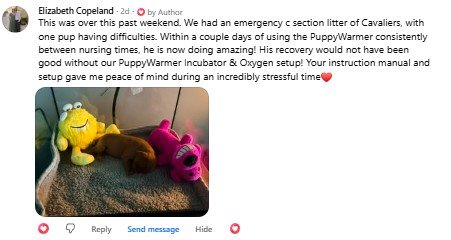
A breeder's care, combined with a Puppywarmer system, has surprised many Veterinarians.
Puppy Oxygen Therapy Benefits: When Immediate Intervention Saves Lives
Gasping is one of the most frightening moments in a whelping room. A puppy emerges struggling to breathe, and seconds matter. This is where oxygen therapy becomes not just helpful but potentially lifesaving.
When a puppy arrives oxygen-deprived, immediate intervention changes outcomes dramatically. Gasping puppies can "pink up in 45-90 seconds when oxygen is immediately applied. This rapid color change signals that tissues are receiving oxygen again. But the benefit runs deeper than appearance. Treating a gasping puppy with oxygen immediately can keep the gut open to colostrum longer. That means the puppy retains the ability to absorb critical antibodies and nutrition during those first hours of life.
Respiratory distress in neonates stems from several sources: fluid in the lungs from difficult deliveries, underdeveloped lung capacity, or temporary neurological suppression from birth trauma. Many cases resolve with oxygen support alone. The puppy's respiratory system "wakes up," breathing becomes rhythmic, and the crisis passes. Without intervention, the same puppy might not survive the first hour.
Professional oxygen concentrators paired with incubators create an integrated care system. The concentrator delivers oxygen at controlled flow rates, typically 0.5 to 2 liters per minute for neonates. Inside the incubator, oxygen mixes with ambient air, preventing excessive concentration that could damage developing lungs. The enclosed environment ensures the puppy receives consistent oxygen support without requiring constant manual intervention.

Puppywarmer Standard Oxygen Concentrator
Best Incubator for Newborn Puppies: What Professional Equipment Delivers
Not all incubators are created equal. The difference between a basic heating unit and professional-grade equipment lies in precision, durability, and the features that actually matter for neonatal survival.
The best incubator for newborn puppies combines several critical capabilities. Temperature control must be precise, ideally within 1-2 degrees of your target. A PID learning controller adjusts heating in real time based on continuous temperature feedback, preventing the overshooting and undershooting that plague basic thermostats. Fast-acting temperature sensors detect even small changes, allowing the system to respond before the environment drifts dangerously.
Material choice affects both function and sanitation. Glass enclosures offer complete visibility, you can monitor puppies without opening the unit and losing heat. Glass also withstands repeated cleaning and disinfection without degradation. Solid construction with sealed seams prevents heat loss and maintains the thermal gradient your puppies depend on. new puppy checklist.
Airflow circulation matters more than most breeders realize. Stagnant air allows CO2 to accumulate and temperature gradients to form. Professional incubators include ventilation that exchanges air without creating drafts. This facilitates proper air exchange and CO2 removal while maintaining stable warmth.
The Puppywarmer Breeders Series incubators exemplify these standards. Available in three sizes, 12x12x12" for toy breeds, 18x18x18" for standard litters, and 24x18x18" for large breed operations, they accommodate different breeding programs without oversizing. The ceramic infrared heater warms puppies 1 inch into their body, creating deep tissue warmth rather than surface heat. The glass enclosure provides complete visibility and easy cleaning between litters.

Breeders Series 24x18x18" Puppywarmer Incubator
For rescue operations managing orphaned or premature litters, the same principles apply. You need equipment that maintains exact temperatures, allows monitoring without heat loss, and can be thoroughly sanitized between animals. Professional-grade incubators designed for neonatal care deliver all three.
Setting Up and Maintaining Your Incubator: Step-by-Step Calibration
Buying an incubator is only half the battle. Proper setup and maintenance determine whether you achieve the precise thermal control the equipment promises.
Initial Setup (before whelping season):
- Unpack and inspect all components. Check that the glass enclosure is intact, heating elements are secure, and thermometer sensors are properly positioned.
- Clean thoroughly. Use warm soapy water and a soft cloth on glass surfaces. Wipe down interior surfaces and ensure no dust or manufacturing residue remains.
- Place the incubator in its permanent location. Choose a spot away from direct sunlight, drafts, and high-traffic areas. The unit should sit on a stable, level surface.
- Position the primary sensor in the center of the incubator at puppy-height, roughly 1-2 inches above the puppies’ heads. This gives accurate readings of the environment where puppies actually rest.
- Power on and calibrate. Set the target temperature to 85°F and run the unit for 2-4 hours.
- Test oxygen integration (if using a concentrator). Verify that oxygen tubing connects securely and that flow rates are adjustable. Run the concentrator at low flow (1 L/min) and confirm oxygen delivery into the incubator without creating pressure or excessive circulation.
Between Litters (maintenance):
- Allow the unit to cool completely (30-45 minutes).
- Remove bedding and any soiled materials.
- Disassemble the glass enclosure if your model allows. Wash with warm soapy water, rinse thoroughly, and air dry completely.
- Wipe down all interior surfaces with a disinfectant appropriate for animal care environments. Allow proper contact time per the disinfectant instructions.
- Inspect heating elements and sensors for any visible damage or debris.
- Reassemble and run a verification cycle at your target temperature before introducing new puppies.
Remove water from the oxygen concentrator humidity vessel, run at 3 lpm for two hours to dry. Clean tubing with 70% alcohol.
The Financial Case: When Incubators Pay for Themselves
The upfront cost of a professional incubator, ranging from $825 for compact models to $1,225 for larger units, feels substantial. The real question is what you're protecting and what you're risking.
Consider a typical breeding scenario. A large-breed female delivers a litter of 8-10 puppies. One arrives weak and underweight. Two others show respiratory distress in the first hours. Without intervention, these three are at high risk. With standard heat lamps and luck, you might save one. With professional neonatal care, you save all three.
Each puppy represents value. For responsible breeders, that value isn't just financial, it's genetic contribution, breed improvement, and the animals' own right to life. But financially, even a single healthy puppy sold or placed represents $500-2,000+ depending on breed and market. Save one extra puppy per year, and your incubator pays for itself.
Rescue operations face different math. An orphaned litter of six puppies, all requiring bottle feeding and intensive care, costs roughly $50-100 per puppy in formula, supplies, and labor. Without proper thermal management, mortality rates in rescue situations can reach 30%. A professional incubator reducing that to 10% or less saves multiple lives per year while reducing labor burden.
Many customers report saving several puppies a year with their Puppywarmer system. When you save the first puppy, the system more than pays for itself. Subsequent saves are pure benefit, improved genetics, stronger litters, and the satisfaction of preventing preventable loss.
Beyond direct financial return, consider operational efficiency. A professional incubator automates temperature management, reducing daily monitoring to simple visual checks. For operations managing multiple litters annually, this time savings alone can justify the investment.
Deciding whether puppy incubators are worth it depends on your specific situation. If you manage only occasional, healthy litters with experienced mothers, basic heat management may suffice. But if you breed large litters, work with at-risk breeds, manage rescue animals, or want to maximize survival rates for small for gestational age puppies, professional-grade equipment becomes essential.
The Puppywarmer Breeders Series incubators are designed specifically for these scenarios. With precise temperature control, integrated oxygen support capabilities, and durable construction for repeated sanitization, they give at-risk neonates the stable environment they need to survive and thrive. Whether you're a hobby breeder protecting a cherished litter or a rescue organization dedicated to saving vulnerable animals, the right equipment transforms outcomes.
Frequently Asked Questions
Do I really need an incubator for puppies, or can I manage with heat lamps?
Heat lamps alone lack precise temperature control and create hot spots that risk burning or uneven warming. Professional-grade incubators maintain consistent 95–99°F internal temperatures and prevent the hypothermia that blocks colostrum digestion. For small litters or experienced breeders with perfect conditions, heat lamps may suffice. For at-risk, premature, or small-for-gestational-age puppies, an incubator is the difference between survival and loss.
How much can an incubator actually improve puppy survival rates?
Breeders report dramatic improvements: some have increased small-for-gestational-age puppy survival from 10% to 90%. Immediate oxygen therapy combined with proper thermal control allows gasping puppies to pink up in 45–90 seconds and keeps the gut open to colostrum longer. Most customers report saving multiple puppies per year, with the system paying for itself after the first rescue.
What are the signs of hypothermia in newborn puppies?
Hypothermia symptoms include lethargy, weak suckling, low body temperature (below 95°F), shallow breathing, and inability to regulate body heat. Puppies below 95°F internal temperature cannot process colostrum well and cannot fully digest nutrition, making hypothermia a leading cause of canine neonate mortality. Early detection and immediate warming are critical.
Is an incubator easy to clean between litters, or is it a hassle?
Professional incubators with glass enclosures are designed for quick sanitation. The glass allows visibility and wipes clean with disinfectant in minutes. Solid-state relays and sealed components resist moisture damage.